🗣️ Real Traveler Feedback, Fully Structured
Collect spontaneous traveler opinions about your routes, destinations, attractions, or services — and your competitors — organized by themes, causes, and impact.

Yellow Tokens transforms spontaneous, public traveler feedback from Google Maps, TripAdvisor, and social platforms into prioritized Action Plans. Know exactly what makes travelers choose you — or your competitors — and act on it.

Collect spontaneous traveler opinions about your routes, destinations, attractions, or services — and your competitors — organized by themes, causes, and impact.
Yellow Tokens converts feedback into clear, prioritized decisions that guide marketing, operations, and leadership.
Compare brands and physical locations to understand where traveler feedback signals problems — and where to act first.
We prioritize spontaneous, public traveler feedback — what people naturally say after real experiences — not survey responses.
Yellow Tokens closes the gap between insight, decision, and execution, eliminating analysis paralysis and manual workflows.
Go beyond reputation monitoring. Understand exactly where competitors fail travelers — and how to act faster.

Yellow Tokens is built on over 20 years of experience designing customer insight systems for complex, multi-location operations — now delivered through a focused SaaS platform.




Yellow Tokens continuously collects spontaneous traveler feedback from Google Maps, TripAdvisor, and social platforms about your brand, locations, and competitors. Everything is structured into actionable themes.
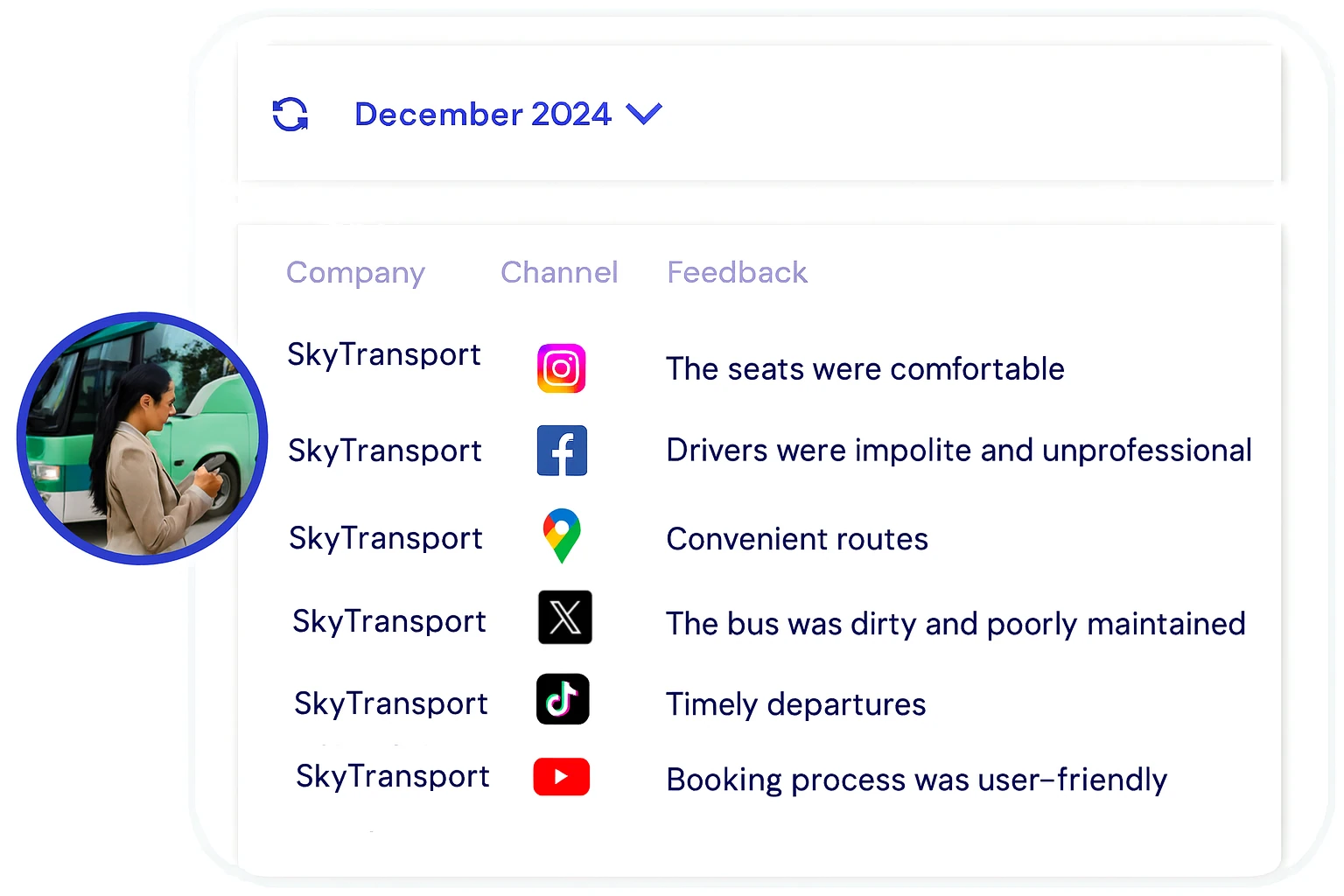
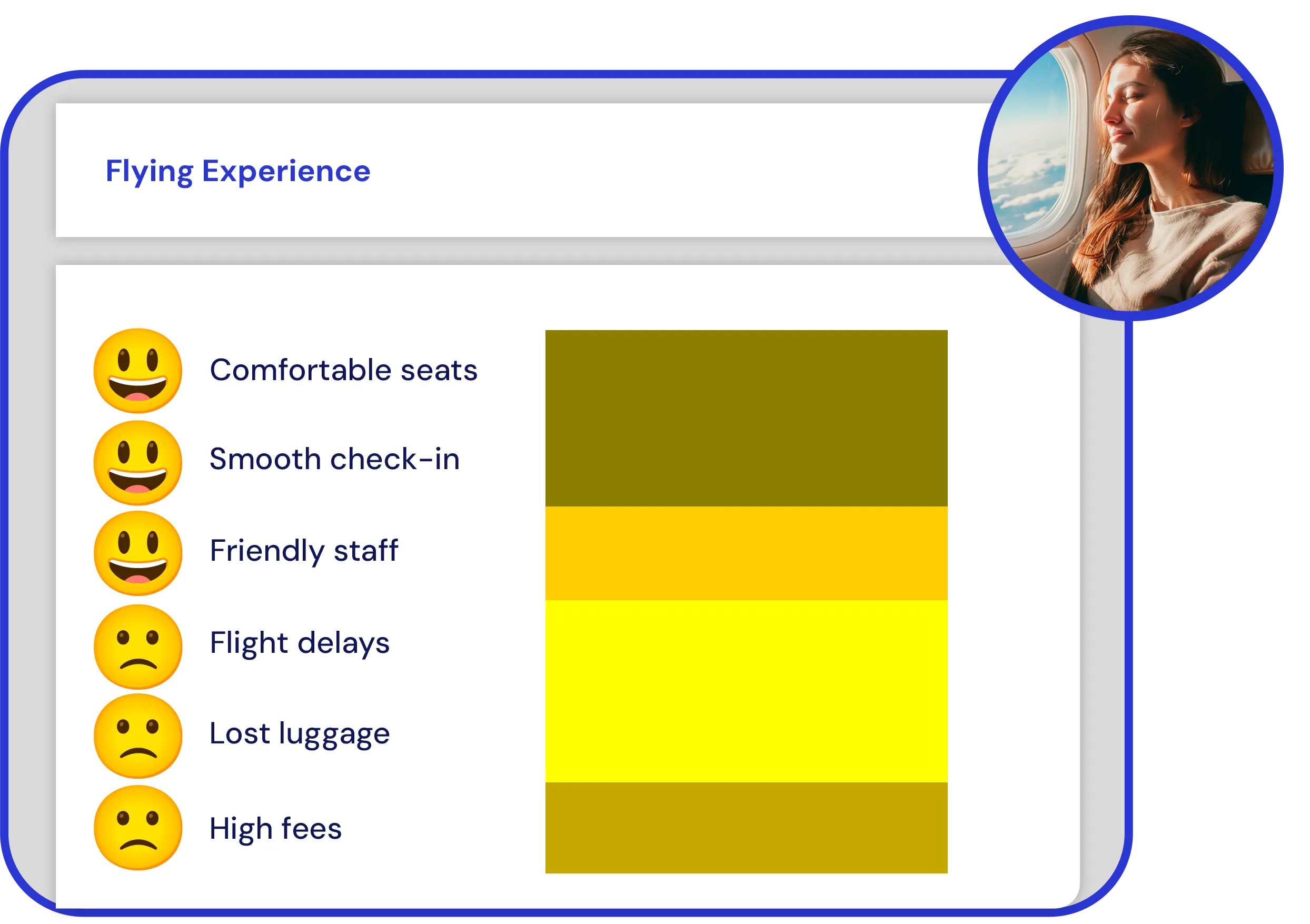
Identify recurring themes like punctuality, comfort, staff behavior, or pricing perception that influence traveler satisfaction and brand preference.
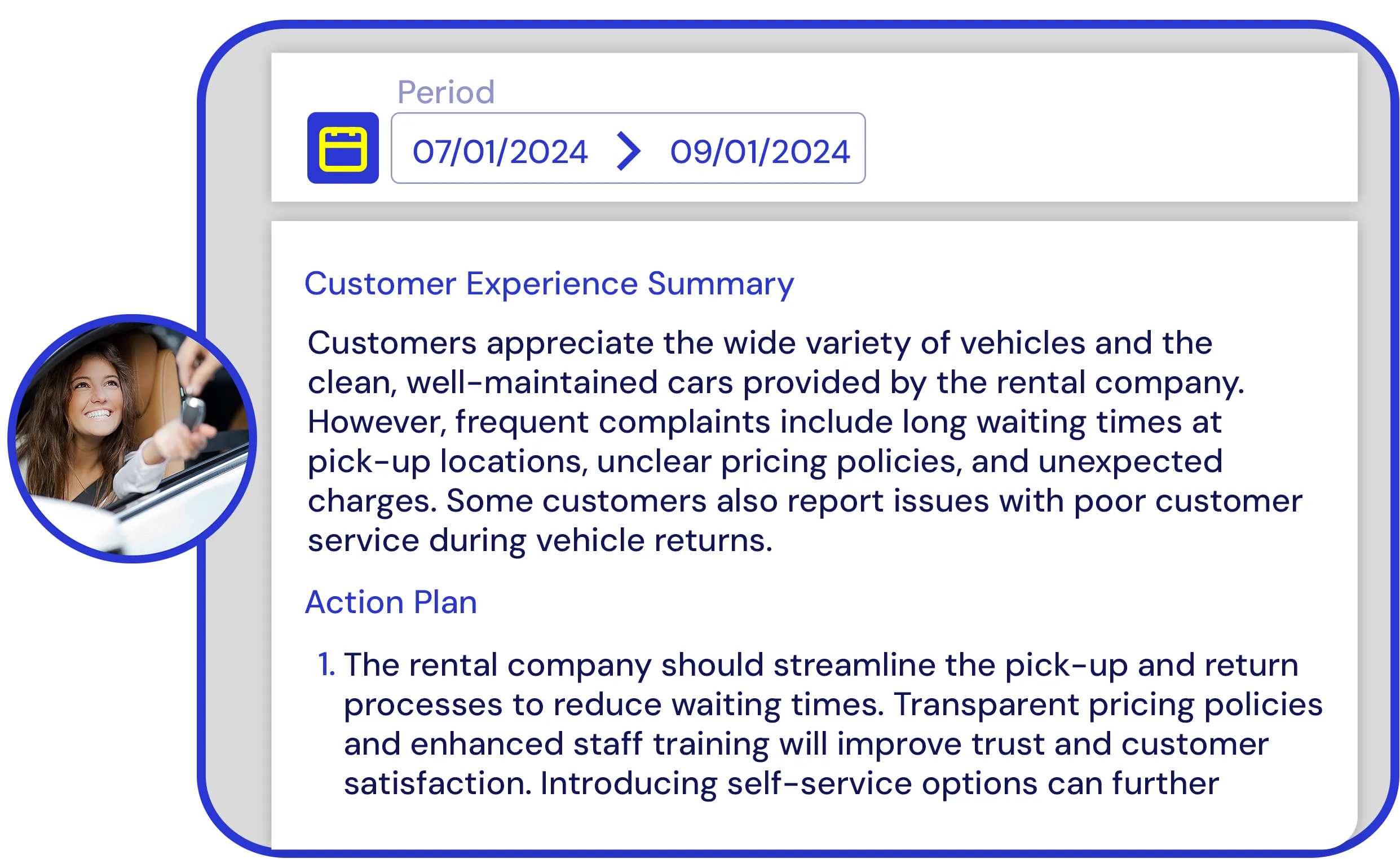
Each insight becomes a structured, PDCA-based Action Plan, guiding marketing, Customer Experience, and operations teams on exactly what to improve and where to start.
Yellow Tokens analyzes real, public, and unsolicited customer feedback from the digital platforms where consumers naturally share their experiences. These spontaneous signals are transformed into structured intelligence and concrete Action Plans — going far beyond mentions, keywords, or engagement tracking.
Brand-level feedback shared openly across social and content platforms, reflecting perceptions of reputation, messaging, and customer experience.


Location-based feedback tied to physical experiences, service quality, and operational execution at individual stores, branches, or venues.


Yellow Tokens uses a flexible, usage-based model — pay only for the companies, establishments, and products you analyze, and for the users in your workspace.
Prefer full details? Visit the Pricing page.
A practical workflow to understand traveler perception, improve experience consistency, and attract travelers dissatisfied with competing options.
Start with a free account and upgrade to a business plan to unlock travel intelligence and action planning.
Start NowAdd your travel brands, register physical locations associated with each brand, and include competitors to enable competitive analysis.
Yellow Tokens structures public traveler feedback into themes related to experience, value, and reliability.
Analyze spontaneous CSAT and NPS to identify what drives booking decisions and switching behavior.
Continuous Improvement PDCA Action Plans improve traveler experience internally. When competitors are registered, Competitor Gaps Action Plans help attract travelers dissatisfied with alternative options.
Yellow Tokens does not replace existing CX, BI, or reputation tools. It complements them by transforming spontaneous, public customer feedback into structured intelligence and prioritized action plans. Instead of dashboards that explain what happened, Yellow Tokens focuses on why issues occur and what should be addressed first, based on frequency, impact, and competitive gaps.
The platform helps reduce operational friction, prevent churn, and improve satisfaction metrics by prioritizing the problems that most influence customer defection and dissatisfaction. Teams typically see value through: fewer recurring complaints, better alignment between CX and operations, faster prioritization of improvements, and clearer opportunities to attract customers dissatisfied with competitors.
No. Yellow Tokens does not respond to reviews and does not replace reputation management or customer service tools. Its role is analytical and strategic: identifying recurring themes, root causes, and market gaps so teams can act upstream, before issues escalate at scale.
Yellow Tokens integrates with common execution and project management tools such as Asana, ClickUp, monday.com, Trello, and Jira. This allows action plans generated in the platform to be executed and tracked where teams already work. Learn more on the Integrations page.
Implementation is typically fast, since Yellow Tokens relies on publicly available feedback rather than internal data integration. Initial insights usually appear shortly after setup, allowing teams to identify priority issues and opportunities early on.
The platform uses predefined experience taxonomies, semantic analysis, and human-curated structures to filter noise and isolate recurring, high-impact themes. The focus is not isolated complaints, but patterns that affect customer experience, loyalty, and switching behavior.
Spontaneous feedback reflects what customers choose to complain about or praise without being asked. Because it is public, real, and unsolicited, it often highlights issues earlier and more candidly than traditional research methods. Yellow Tokens aggregates signals across platforms to reduce bias from individual comments.
Yes. Complex travel operations generate feedback across many touchpoints: check-in, boarding, baggage, vehicle pickup, delays, cancellations, staff behavior, and service reliability. Yellow Tokens structures this fragmented feedback into coherent experience themes that teams can prioritize systematically.
Yellow Tokens does not model or manage customer journeys. Instead, it identifies recurring experience indicators present in spontaneous public feedback. When customers mention issues related to moments such as check-in, boarding, vehicle pickup, or customer support, those indicators are captured and aggregated. This allows teams to understand where experience frictions most frequently emerge, without tracking individual journeys or modeling end-to-end flows.
Benchmarks are sector-based and use only public feedback from comparable companies. Yellow Tokens compares spontaneous CSAT, spontaneous NPS, and Spontaneous Feedback Index (SFI) against the real market average for travel and tourism.
The platform is designed for cross-functional use. Operational teams benefit from clear prioritization and PDCA action plans, while CX and marketing teams gain visibility into perception and competitive gaps. The focus on concrete actions makes adoption easier than insight-only dashboards.
No extensive training is required. The interface is intuitive and insights are presented in structured summaries, dashboards, and action plans. Onboarding focuses on how to interpret and prioritize insights, not on technical configuration.
All teams work from the same source of truth: real customer feedback from the market. Operational teams focus on Continuous Improvement PDCA Action Plans, while marketing and growth teams can act on Competitor Gaps Action Plans to capture dissatisfied customers from competitors.
Yellow Tokens analyzes only publicly available customer feedback. It does not collect sensitive personal data, private communications, or internal customer records. The platform is designed to minimize data risk by default, focusing solely on aggregated public signals.
Social listening tools focus on monitoring mentions, while Voice of the Customer platforms rely primarily on surveys and solicited feedback. Yellow Tokens operates in a different category: it transforms spontaneous, public feedback into benchmarks, competitive gap analysis, and structured PDCA action plans. The platform is designed to bridge the gap between insight and execution, not to track mentions or collect responses. Learn more in our comparisons with social listening tools and Voice of the Customer platforms.